Case Study GRID
GRID — Intelligence Delivery Platform
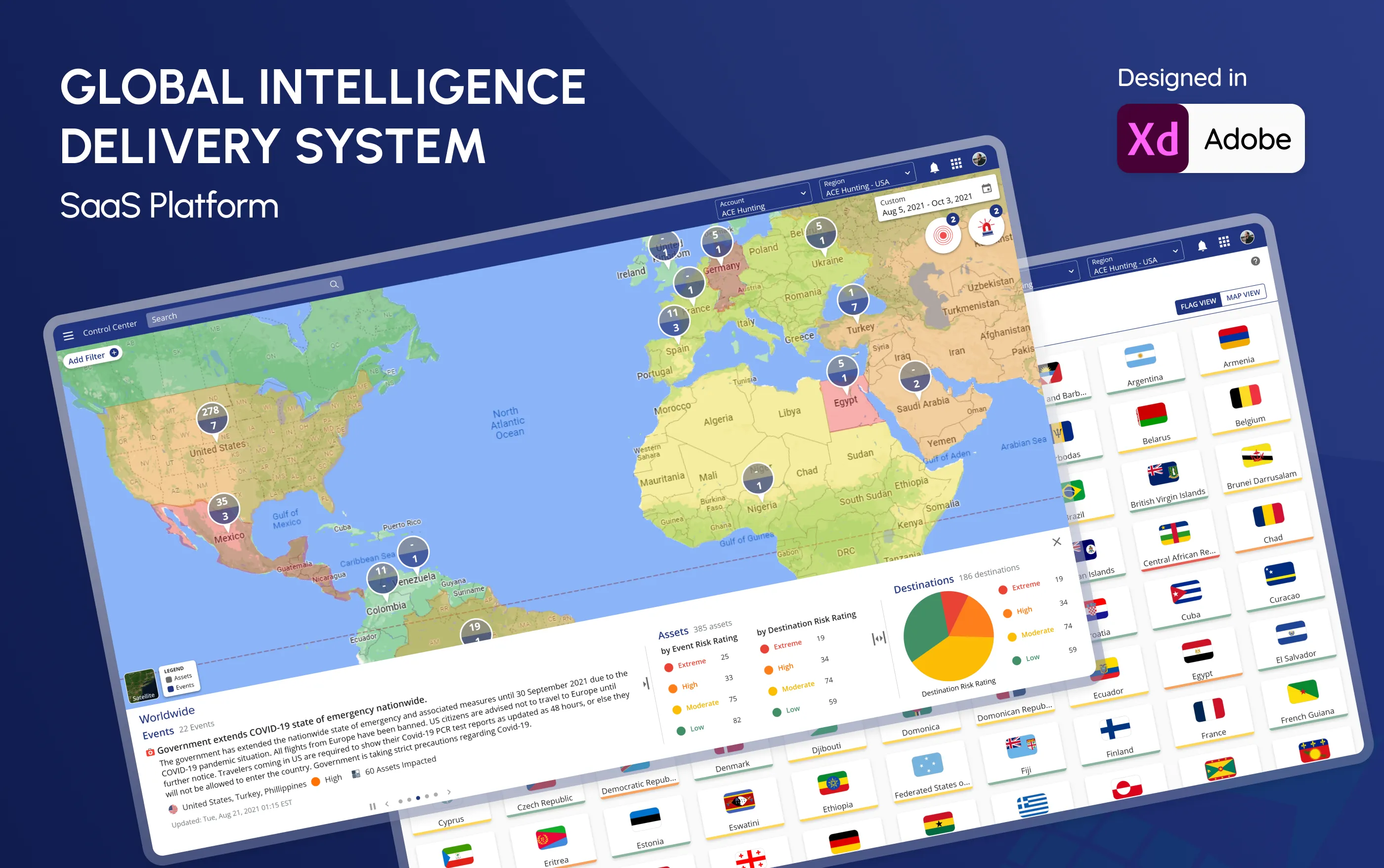
GRID is a powerful intelligence delivery SaaS platform designed for enterprise and individual consumers, enabling real-time visibility, situational awareness, and operational control across global environments.
Overview
Consolidating global travel, risk, and asset visibility into one control center.
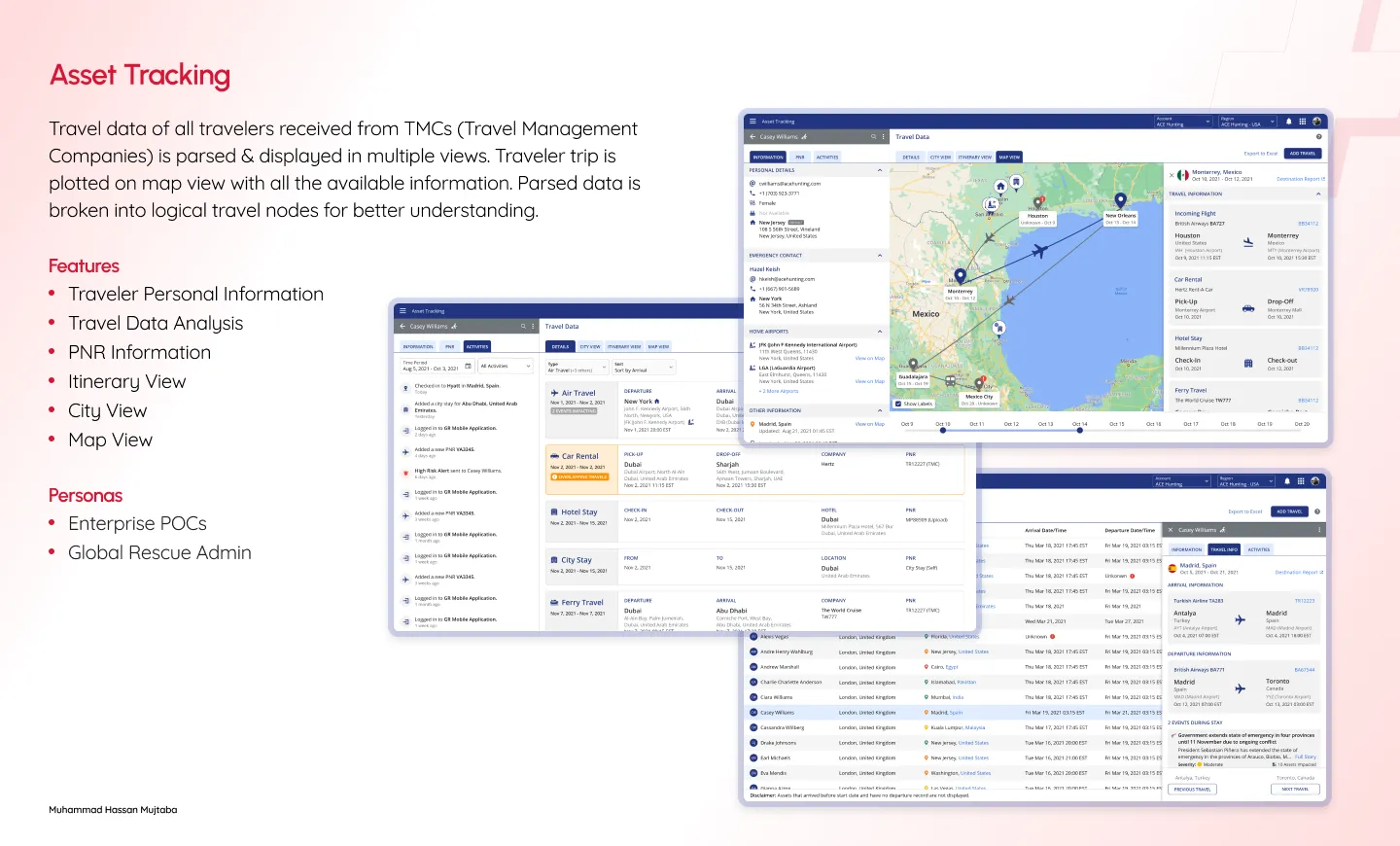
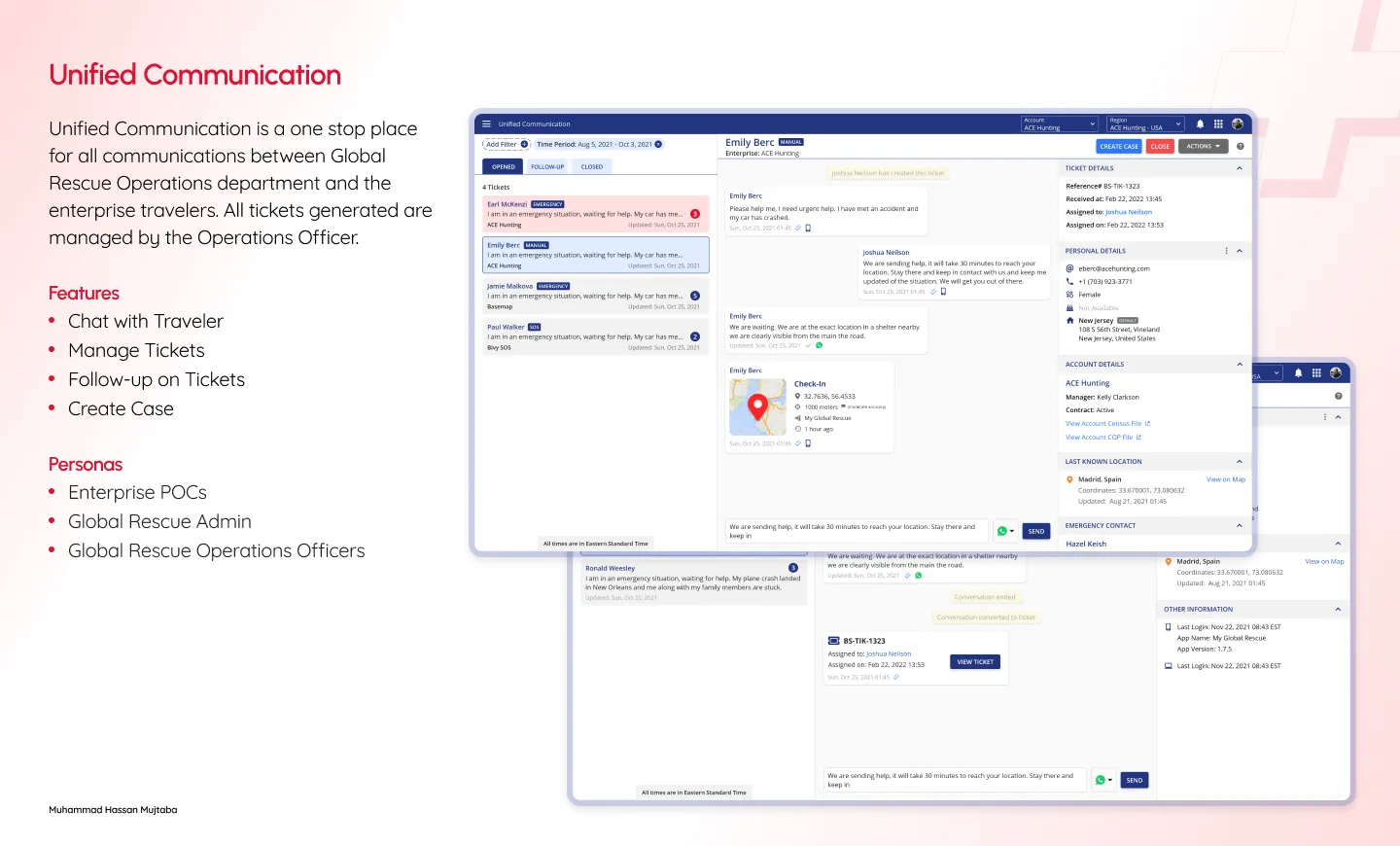
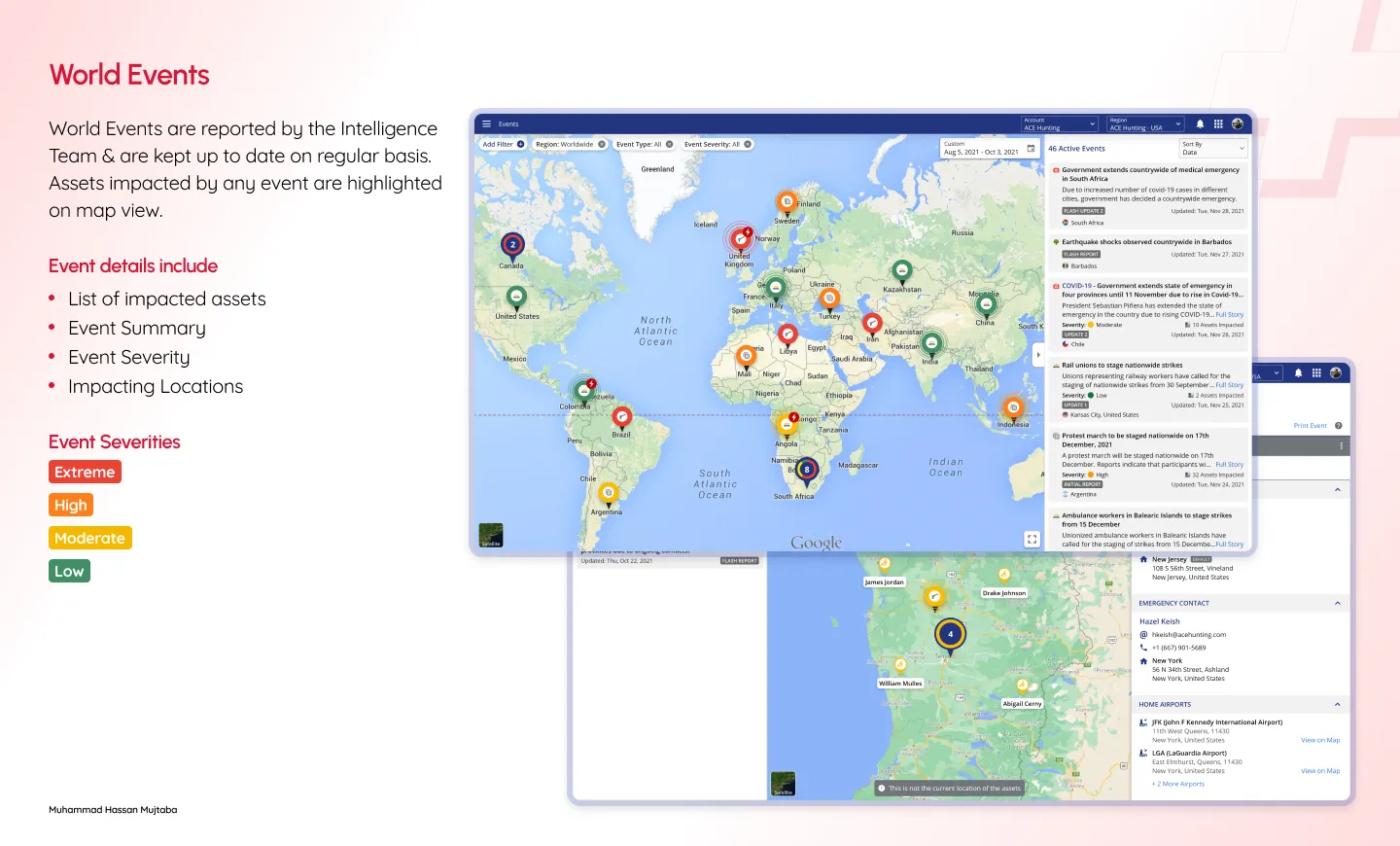
GRID offers a comprehensive suite of services including Employee & Asset Tracking, a centralized Control Center, Travel Data Management & Analysis, World Events Analysis, Enterprise Customer Management, Unified Communication, and Mass Communication.
The platform empowers enterprise admins and account Points of Contact (POCs) to track and manage travelers and assets worldwide, ensuring real-time insights and control during critical operations — even during travel.
My Responsibilities
I led the end-to-end design of GRID, working closely with cross-functional teams to define strategy, architecture, and execution for a complex, real-time enterprise platform.
- Brainstorming with the Product Manager and Vice President on feature strategy and roadmap
- Proposing new features and workflows based on requirements and data
- Conducting cross-departmental workshops with Intelligence, Operations, Sales, and Marketing teams
- Performing a UI/UX audit of the existing GRID system to identify usability gaps
- Defining UX architecture and system structure
- Designing high-fidelity user interfaces
- Conducting usability testing and iteration
- Presenting designs to board members and stakeholders
- Design handoff and collaboration with development teams
UX Challenges
GRID presented several complex UX challenges inherent to real-time, mission-critical systems:
- Designing data-dense, real-time dashboards without overwhelming users
- Creating role-specific experiences for enterprise admins, account POCs, and individual users
- Synthesizing world events, travel analytics, and actionable insights into understandable visualizations
- Designing alert and notification workflows for urgent communication
- Managing multi-layered navigation for enterprise and individual monitoring
Additionally, ensuring traveler safety revealed key gaps in the existing experience:
- No consolidated view to track all travelers at once
- No visibility into communication history with travelers
- Difficulty locating impacted travelers' coordinates
- Poor interpretability of travel data provided by TMCs
- No visual representation of traveler routes over time
AI-Assisted Design & Intelligence
I leveraged AI-assisted design workflows to accelerate delivery and improve decision-making across the product lifecycle: AI-assisted ideation and layout exploration for dashboard-heavy modules, AI-supported usability analysis to identify real-time monitoring pain points, and AI-generated design documentation, assets, and prototypes for faster developer handoff.
GRID also integrated AI-powered product features, including predictive alerts based on travel patterns and world events, and intelligent summarization for control center dashboards.
Impact
- Increased visibility and situational awareness of travelers and assets globally
- Accelerated design delivery by 25% through AI-assisted workflows
- Improved usability of multi-role dashboards, enabling faster enterprise adoption
Tools Used: Figma · Adobe Creative Suite · LottieFiles
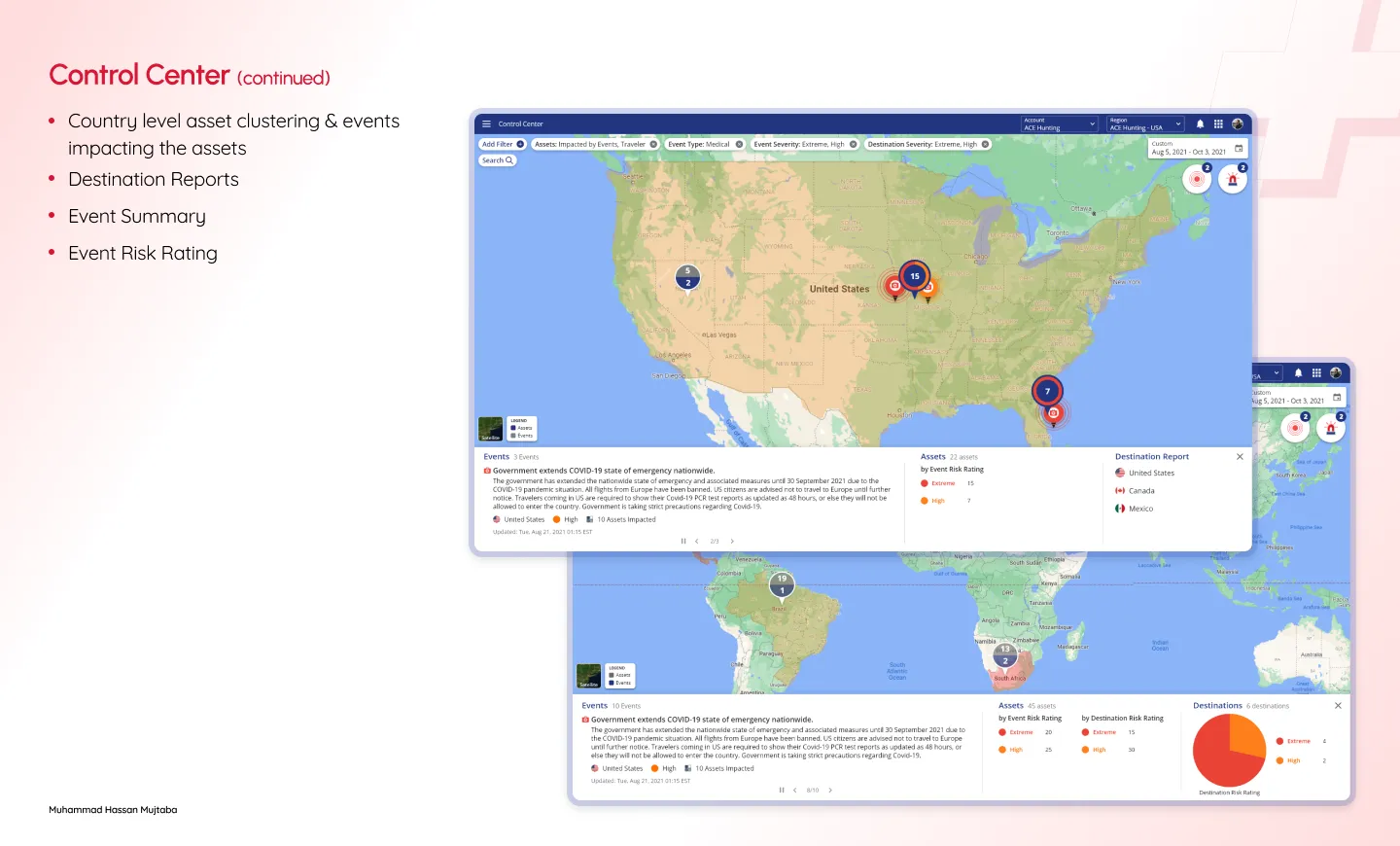
Control Center
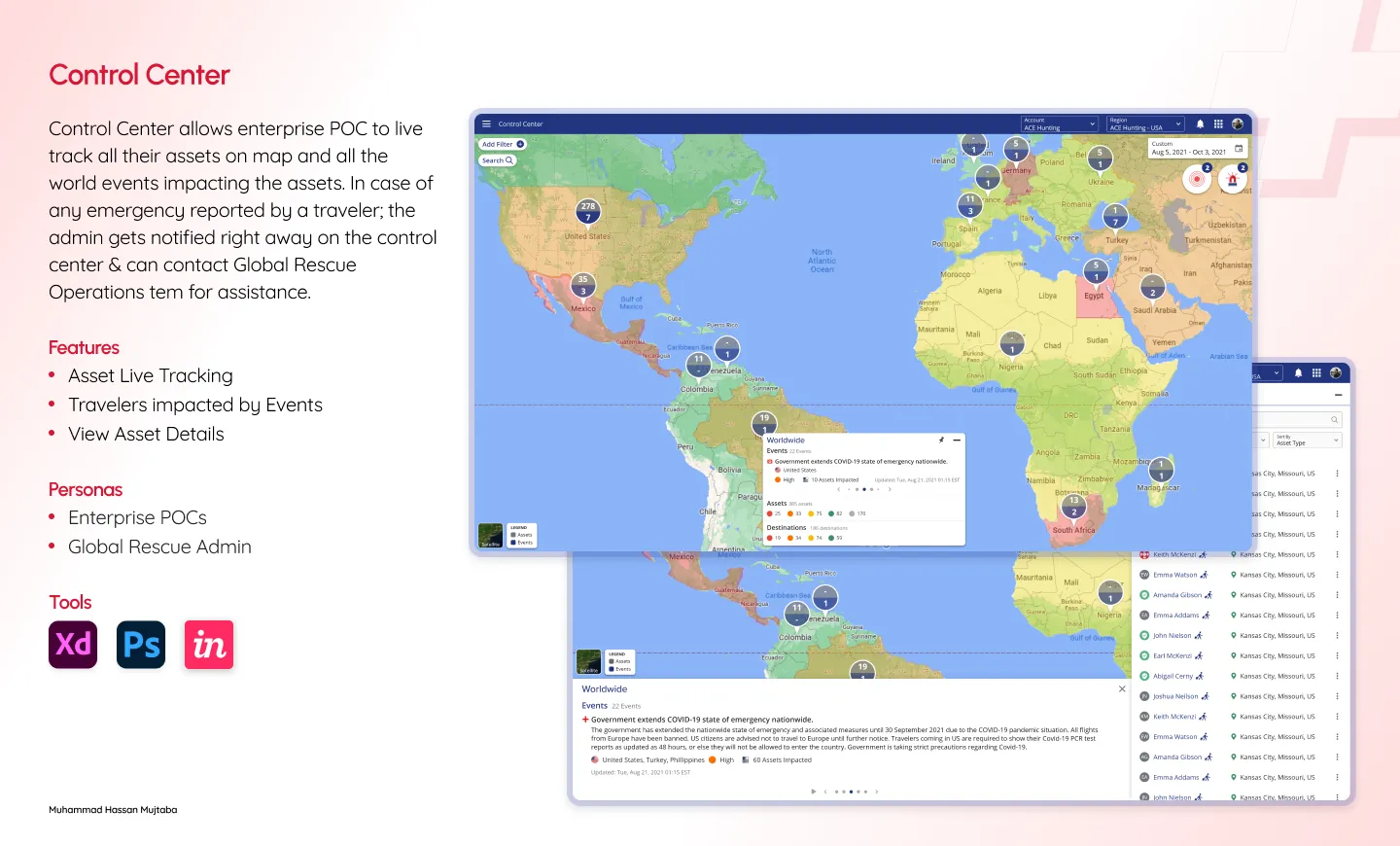
Asset Tracking
Unified Communication
Real-time World Events
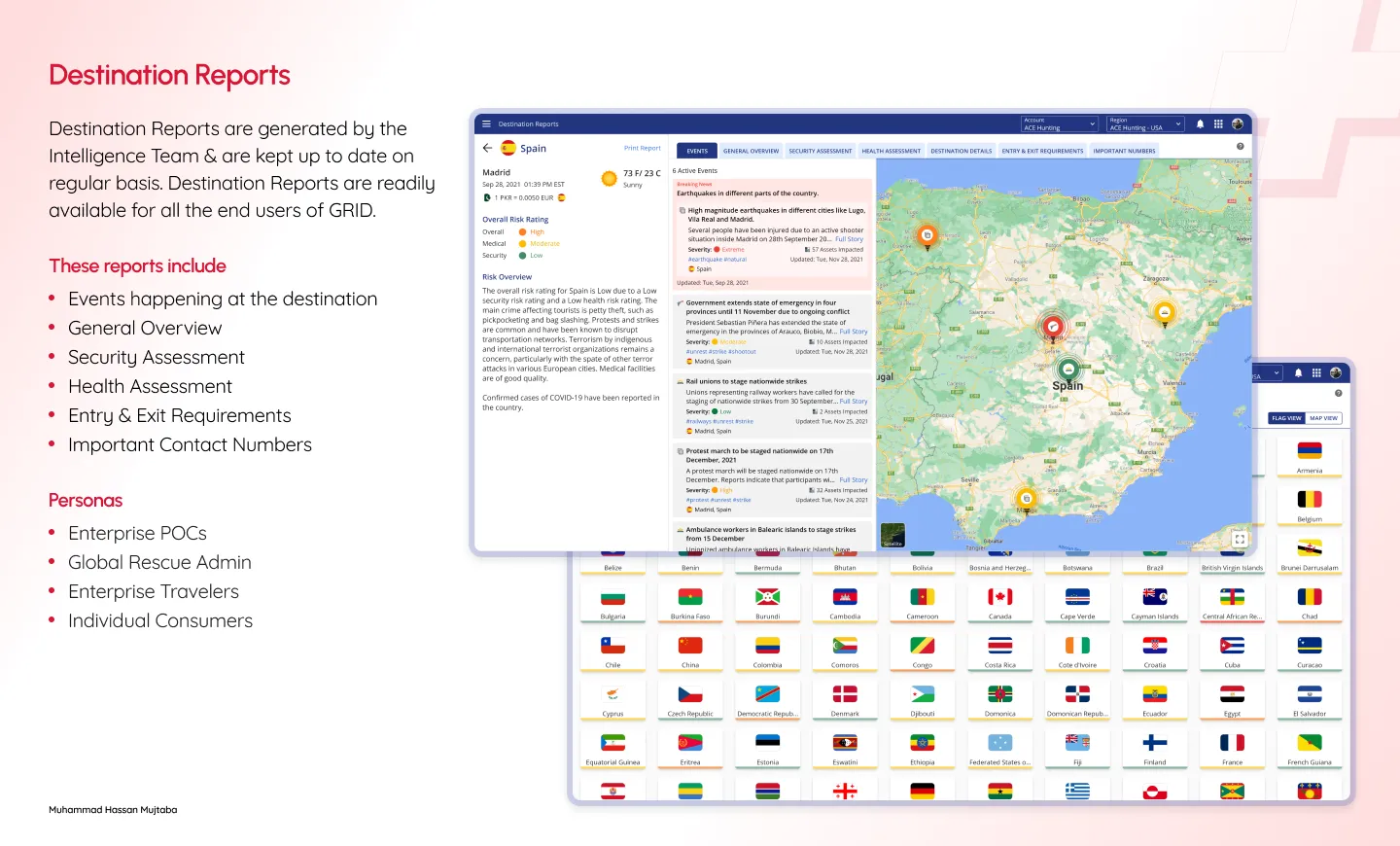
Destination Reports